
Description
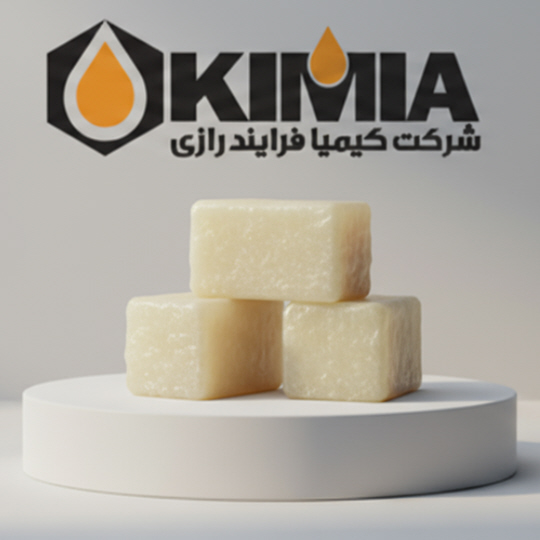
Slack Wax
Slack Wax, the primary raw material for manufacturing paraffin wax, is a mixture of wax and oil with a variable oil content ranging from 5%5\% to 35%35\%. It serves as the main feedstock for de-oiling units and is also utilized directly as a highly economical solution in industries such as particleboard and MDF manufacturing, candle making, and the production of waterproof coatings.
Slack Wax, also known as unrefined wax, is a critical and strategic raw material in the petrochemical supply chain. As an unrefined wax with a significant oil content, it is obtained as a byproduct during the production of base lubricating oils from crude oil. It is not only the primary feedstock for producing Fully Refined Paraffin Wax but is also highly sought after for direct application across various industries due to its highly competitive pricing.
For paraffin manufacturers, particleboard and MDF plant managers, and chemical industry professionals, a deep understanding of this material’s technical specifications is key to optimizing processes, managing costs, and achieving desired quality. Selecting the appropriate grade of Slack Wax can maximize paraffin production yield or significantly enhance end-product properties, such as moisture resistance. This guide provides a technical analysis of this valuable raw material.
Technical Analysis and the Nature of Slack Wax
The quality and application of Slack Wax depend directly on its refinery origin and the strict control of its physical and chemical parameters. It is a complex mixture of hydrocarbons, and its behavior varies based on the percentage of its constituent elements.
Origin and Grade Classification
To understand the nature of Slack Wax, we must look at the core of the base oil production process. This material is a byproduct of a crucial stage known as de-waxing.
A Byproduct of the Lubricant De-waxing Process
During base oil production, suitable oil fractions (Lube Cuts) must be de-waxed to lower their Pour Point. The lube cut is mixed with solvents like Toluene and Methyl Ethyl Ketone (MEK) and chilled to extremely low temperatures. At this stage, wax molecules crystallize and separate from the oil phase. The resulting semi-solid mass—a mixture of wax crystals and trapped oil—is filtered and referred to as Slack Wax.
Distinguishing Light and Heavy Grades
Slack Wax is categorized into two main groups based on the initial lube cut from which it is derived:
- Light Grade Slack Wax: Derived from lighter base oil cuts. It features a lower melting point, lower viscosity, and typically a higher oil content.
- Heavy Grade Slack Wax: Derived from heavier base oil cuts. It exhibits a higher melting point, higher kinematic viscosity, and a coarser crystalline structure.
Key Parameters Determining Quality and Application
Evaluating Slack Wax for any specific application requires a precise analysis of its technical specifications, as provided in the Certificate of Analysis (COA).
- Oil Content (ASTM D721): 5%5\% – 35%35\% (Primary indicator for pricing and application suitability).
- Melting Point (ASTM D87): 45−65∘C45 – 65^\circ \text{C} (Determines the grade and thermal stability).
- Kinematic Viscosity at 100∘C100^\circ \text{C}: 4−20 cSt4 – 20 \text{ cSt} (Affects pumpability and processability).
- Color: Light Yellow to Brown (Indicates the level of impurities).
Oil Content: The Ultimate Quality Indicator
Oil content is the most critical parameter defining the quality and price of Slack Wax. This figure indicates the weight percentage of the oil phase in the product. The lower the oil content, the closer the product is to pure paraffin, making it more solid and valuable. Paraffin manufacturers actively seek Slack Wax with the lowest possible oil content to maximize their production yield.
Melting Point and Product Consistency
The melting point directly correlates with the hydrocarbon chain length of the wax and is the primary factor in distinguishing between light and heavy grades. This parameter is particularly crucial in direct applications, such as particleboard manufacturing, where the wax must be compatible with the pressing temperatures and resins used.
Strategic Applications and Economic Considerations
Slack Wax serves a dual purpose: it acts as a raw material for higher value-added products and as a cost-effective final product for bulk applications.
Slack Wax as a Primary Raw Material
The most prominent application of this product is serving as feedstock in paraffin production units.
Production of Fully Refined Paraffin Wax
In this process, known as de-oiling (or sweating), Slack Wax is re-mixed with solvents and chilled to separate wax crystals from the oil. The resulting solid product is paraffin wax with a very low oil content (typically under 0.5%0.5\%), while the extracted liquid phase forms a valuable byproduct known as Foots Oil.
Direct Applications Across Industries
Thanks to its economic pricing, Slack Wax is directly utilized in industries requiring the hydrophobic (water-repellent) and lubricating properties of wax without the strict need for high purity.
The Wood Panel Industry (MDF and Particleboard)
In MDF and particleboard manufacturing, Slack Wax emulsion is used as an affordable waterproofing agent. This emulsion is sprayed onto wood chips along with the resin. During the hot-pressing process, the wax melts and forms a protective moisture barrier throughout the board, effectively preventing swelling and dimensional changes.
Other Industrial Applications
- Candle Making: Used for rustic, decorative, or outdoor candles where premium burning quality is not the primary concern.
- Waterproofing: Applied in impregnating canvas, tarpaulins, and cardboard protectors.
- Antifoam Agent: Used in various industrial chemical processes.
- Rubber Industry: Acts as a softener and processing aid.
Key Considerations for Purchasing and Transportation
When purchasing Slack Wax, ensuring supplier quality consistency is vital. Fluctuations in oil content can disrupt the entire production process. This product is typically supplied in bulk using double-jacketed ISO tanks (to maintain temperature during transit) or in standard steel drums.
Ultimately, Slack Wax is a classic example of a byproduct that, with proper management, has transformed into a highly valuable and profitable raw material for diverse industries. To source premium Slack Wax with precise technical analysis and consistent quality in both light and heavy grades, the technical experts at Kimia Farayand Razi are ready to provide specialized consultation and competitive quotes.

Reviews
There are no reviews yet.