
Description
Industrial Liquid Paraffin, technically referred to as Mineral Oil in industrial nomenclature, is one of the most versatile and strategic petrochemical derivatives in modern manufacturing. This product is a highly purified saturated hydrocarbon that, through complex refining and filtration processes, is completely purged of aromatic compounds, polar substances, and harmful impurities. The result is a transparent, water-white, odorless liquid with exceptional chemical and thermal stability. These unique characteristics have established it as an essential raw material and functional additive across a vast spectrum of applications, from polymer production to textiles and wood processing.
For process engineers, production managers, and procurement specialists, a deep understanding of the technical specifications of Industrial Liquid Paraffin is critical. Selecting an inappropriate grade can not only severely compromise the quality of the end-product but also damage expensive machinery and jeopardize the safety of the production line. This guide provides a comprehensive technical analysis, exploring key characteristics, specialized applications, and selection criteria to assist you in making an informed procurement decision.
Technical Analysis and Structural Specifications
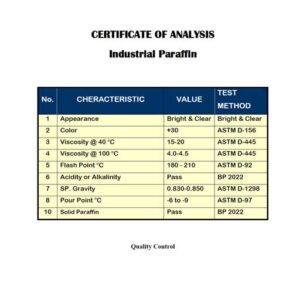
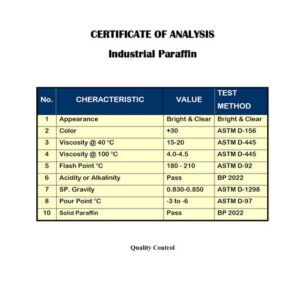
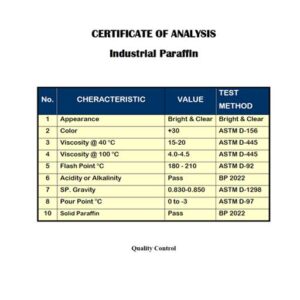
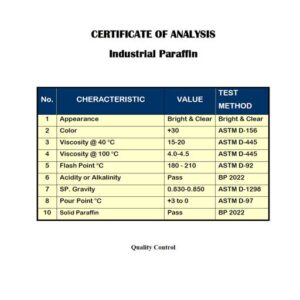
The consistent quality and performance of Industrial Liquid Paraffin depend entirely on the production process and the strict monitoring of its physical and chemical parameters. Its chemical inertness and high resistance to oxidation are its primary advantages in harsh industrial environments, distinguishing it from conventional industrial oils.
Production Process and Quality Control
Purity is the foundational characteristic of liquid paraffin. Any residual impurities can trigger unwanted reactions, discoloration, unpleasant odors, or reduced stability in the final product. Therefore, meticulous control over the manufacturing process is paramount.
Advanced Refining and Aromatic Depletion
Liquid paraffin is derived from the distillation of crude oil, followed by the advanced refining of specific fractions. Key processes, such as Hydrotreating and Solvent Extraction, are employed to entirely eliminate unsaturated compounds, aromatics (such as benzene and toluene), and elements containing sulfur and nitrogen. The complete eradication of these compounds drastically enhances the oxidation and thermal stability of the product while minimizing its toxicity—factors that clearly differentiate industrial grades from cosmetic or pharmaceutical variants.
The Importance of Standards (ASTM) and Certificate of Analysis (COA)
Premium-grade products consistently comply with recognized international standards, such as those set by the ASTM (American Society for Testing and Materials). The Certificate of Analysis (COA) provided by the manufacturer must be thoroughly evaluated. These certificates supply precise data regarding the product’s key parameters, acting as a guarantee for quality consistency across different production batches.
Key Physico-Chemical Parameters
Physical properties directly dictate how paraffin behaves and performs within a specific process. Selecting the optimal grade requires aligning these properties with the technical demands of your intended application.
| Technical Specification | Typical Range | ASTM Method | Industrial Significance |
|---|---|---|---|
| Kinematic Viscosity at 40∘C40^\circ\text{C}40∘C | 10−90 cSt10 – 90 \text{ cSt}10−90 cSt | ASTM D445 | Determines lubricity, film thickness, and pumpability. |
| Flash Point | 150−250∘C150 – 250^\circ\text{C}150−250∘C | ASTM D92 | Safety indicator; denotes the maximum safe operating temperature. |
| Density at 15∘C15^\circ\text{C}15∘C | 0.82−0.89 g/cm30.82 – 0.89 \text{ g/cm}^30.82−0.89 g/cm3 | ASTM D1298 | Crucial for formulation calculations, transport, and storage layout. |
| Color (Saybolt) | +30+30+30 (Colorless) | ASTM D156 | Indicates high purity and the absolute absence of color impurities. |
Viscosity and Its Impact on Lubrication and Pumpability
Viscosity, which measures a fluid’s resistance to flow, is the most critical parameter when selecting paraffin for lubrication purposes. Lower viscosity grades are suited for applications requiring rapid penetration and quick coating (such as textile fiber lubrication). Conversely, higher viscosity grades are deployed where a thicker, more resilient oil film is necessary (such as process aids in rubber manufacturing).
Flash Point and Process Safety Considerations
The flash point is the lowest temperature at which a liquid’s vapors will ignite when exposed to an ignition source. This parameter is a vital indicator for the safe storage, transportation, and application of the product in high-temperature environments. Choosing a liquid paraffin with a flash point safely above your process’s maximum operating temperature minimizes fire risks.
Saybolt Color and Oxidation Stability
The color of liquid paraffin is measured using the Saybolt scale, where a value of +30+30+30 signifies a completely colorless, “water-white” liquid. High transparency denotes maximum purity and the complete removal of color-inducing impurities. This feature is particularly crucial in industries like white masterbatch production, where color stability is essential, and it serves as a strong indicator of the product’s high oxidation stability.
Strategic Applications and Optimal Grade Selection Guide
Due to its unique properties—namely chemical inertness, hydrophobicity, and high compatibility—Industrial Liquid Paraffin plays a pivotal role in diverse industries. Selecting the correct grade is the key to ensuring efficiency and quality in these sectors.
Application Scenarios in Leading Industries
1. Rubber and Plastics Industry: Plasticizer and Process Aid
Within the polymer industry, Industrial Liquid Paraffin is extensively used as a Process Oil and Plasticizer. It improves the flow properties of the polymer melt during extrusion and molding processes, reduces energy consumption, and enhances the flexibility of the final products (such as tires, hoses, and rubber components). Furthermore, its excellent compatibility with various polymers, including EPDM, SBR, and PVC, is a significant advantage. (Note: In this sector, other products like Heavy Solid Paraffin are also utilized as antiozonants).
2. Textile Industry: Fiber and Yarn Lubricant
During the spinning and weaving of yarns and fabrics, friction between fibers and machinery can lead to breakage, reduced quality, and slower production speeds. Industrial Liquid Paraffin acts as an ideal lubricant. By creating a thin, uniform layer over the fibers, it minimizes friction, prevents static electricity buildup, and streamlines the manufacturing process. For this specific application, the product must be absolutely colorless and odorless to prevent any adverse effects on the final fabric’s quality.
Key Considerations for Procurement and Storage
To guarantee stable performance and safeguard your production lines, adhere to the following guidelines when purchasing and handling Industrial Liquid Paraffin:
- Analyze the Certificate of Analysis (COA): Always request the COA from your supplier and cross-reference key parameters—such as viscosity, flash point, and color—with your technical requirements. This step is vital for ensuring batch-to-batch consistency.
- Optimal Grade Selection: Choose the appropriate grade based on your specific application. For instance, the oil required for wood treatment may differ significantly from the oil utilized as a raw material in Slack Wax processing.
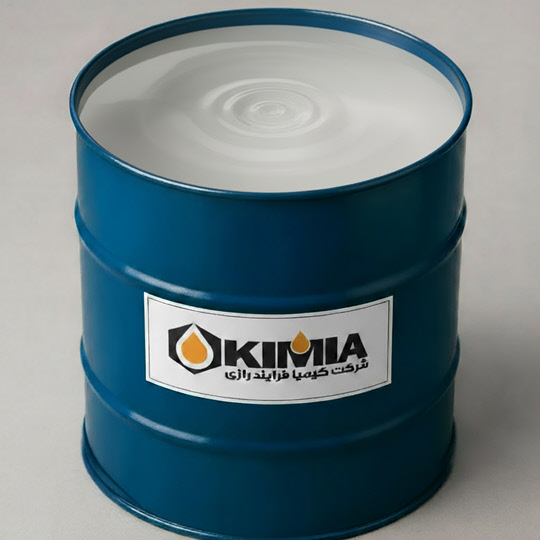
- Packaging and Transportation: Ensure the product is packaged in clean, standard drums or specialized chemical ISO tanks/flexitanks to prevent any risk of contamination.
- Storage Conditions: Liquid paraffin should be stored in a dry, cool environment, away from direct sunlight, heat sources, and potential ignition points. Proper storage prevents oxidation and maintains product integrity over time.
Ultimately, partnering with a reputable manufacturer capable of delivering consistent quality, robust technical support, and specialized knowledge regarding the technical specifications of industrial paraffin is fundamental to the success of your manufacturing operations.
To ensure premium quality and receive expert consultation on selecting the optimal grade for your specific production process, the technical specialists at Kimia Farayand Razi are readily available to provide precise guidance and competitive B2B quotes.


Reviews
There are no reviews yet.